Thursday, August 12, 2021

Awasome Are Driving Psa Advertisements Effective 2023

Awasome Are Driving Psa Advertisements Effective 2023. Web public service announcements (psas) are frequently used tools to try to change attitudes and behaviors on social. “on my way” (texting) this video, by the u.s.

This PSA uses the same format/style many people use when they text to
This PSA uses the same format/style many people use when they text to from www.pinterest.com

Web abstract the purpose of this study was to inform future public service announcement (psa) development by examining the. Why public service announcements do & don't work. Web you design a psa ad for a campaign that raises awareness about the dangers of drunk driving, and your image is a photo of a.

The Power of Advertising: A Comprehensive Guide

I. Introduction

In today's hectic and extremely competitive company landscape, advertising plays an essential role in shaping the success and growth of companies worldwide. This short article explores the important elements of advertising, shedding light on its meaning, highlighting its huge significance and influence on modern company, and exploring the underlying purpose and goals that drive advertising strategies.

A. Definition of Advertising

Advertising, in its essence, describes the tactical communication and promo of products, services, or concepts to target audiences with the intent of affecting their behavior and driving particular actions. It is a dynamic and innovative marketing approach that harnesses numerous channels and mediums to deliver persuasive messages and record the attention of prospective customers.

At its heart, advertising goals to bridge the gap in between companies and consumers, effectively conveying the value proposals of services and products, thus stimulating demand and cultivating brand awareness. It is a varied practice that integrates creativity, psychology, data analytics, and market research to craft engaging projects that resonate with the target market.

B. Importance and Impact of Advertising in Modern Business

In the modern company landscape, advertising stands as a essential pillar for companies looking to flourish and preserve an one-upmanship. Its significance depends on numerous crucial locations:

  • Brand Awareness and Recognition: Advertising works as the vanguard in building brand name awareness and acknowledgment. It elevates a brand's presence in the market, making it familiar to consumers and assisting in recall when they are ready to make getting choices.
  • Driving Sales and Revenue: Effective advertising campaigns directly effect sales and earnings generation. By reaching possible buyers, articulating item benefits, and engaging them to do something about it, advertising drives customers through the sales funnel, ultimately boosting profitability.
  • Creating a Unique Brand Identity: Through constant messaging and innovative storytelling, advertising assists shape a brand name's identity and character. It allows business to distinguish themselves from rivals, cultivating a loyal client base.
  • Market Penetration and Expansion: For brand-new market entrants or services looking for expansion, advertising serves as a potent tool to permeate brand-new markets and reach untapped consumer segments, widening their client base.
  • Cultivating Customer Loyalty: Advertising is not entirely about obtaining new customers but also about keeping existing ones. Regular engagement through advertising strengthens brand name loyalty, encouraging repeat purchases and advocacy.

C. Purpose and Objectives of Advertising

The overarching function of advertising focuses on accomplishing particular goals that line up with a business's marketing and company goals. The key goals include:

  • Informing and Educating: Advertising plays a role in informing customers about brand-new items, services, or innovations, equipping essential details to make informed choices.
  • Persuading and Influencing: A main objective of advertising is to influence possible customers to prefer a specific brand over its rivals, swaying their getting options favorably.
  • Changing Perception: In cases where a brand deals with obstacles or mistaken beliefs, advertising can be critical in moving public understanding and reshaping the brand name's image.
  • Encouraging Action: Whether it's making a purchase, signing up for a service, or engaging with the brand name, advertising aims to stimulate particular actions from the target audience.
  • Creating an Emotional Connection: Effective advertising appeals to emotions, aiming to develop an emotional connection between the brand and consumers, promoting commitment and long-term relationships.

Advertising functions as a vital force that drives contemporary business success. With its capability to reach vast audiences, influence consumer habits, and shape brand understanding, advertising stays an essential element in the marketing mix of companies throughout industries. Recognizing its definition, acknowledging its significance, and using its function and objectives are essential actions for business seeking to harness the true capacity of advertising in their journey towards success.

II. Historic Evolution of Advertising

A. Early Forms of Advertising

Advertising, in various types, has actually been an essential part of human history considering that ancient times. Early civilizations utilized simple approaches to promote goods and services, leveraging standard interaction strategies to reach possible clients. Some early forms of advertising consist of:

  • Pictorial Signage: In ancient marketplaces, traders used pictorial indications and signs to identify their shops and indicate the items they used. These visual hints worked as an early type of branding and assisted illiterate individuals acknowledge companies.
  • Town Criers: In middle ages Europe, town criers played a crucial role in sharing information and advertising events. They would openly announce news, proclamations, and spot announcements, acting as human "speakers" for services and authorities.
  • Handbills and Posters: In the 17th and 18th centuries, printed handbills and posters ended up being popular advertising tools. These marketing products were plastered on walls, trees, and other public areas to inform the regional neighborhood about items, services, and events.

B. The Birth of Modern Advertising

The Industrial Revolution in the 19th century brought about considerable changes to the advertising landscape. Advancements in innovation and mass production, paired with the growth of urban centers, produced new opportunities for companies to reach larger audiences. Secret turning points in the birth of contemporary advertising include:

  • Newspapers and Magazines: With the increase of industrialization and the printing press, newspapers and magazines emerged as popular advertising platforms. Services began positioning paid ads in publications, targeting specific demographics based on readership.
  • Branding and Logos: As competitors increased, businesses recognized the requirement for distinction. They began embracing logos and slogans to establish brand identities that customers might recognize and trust.
  • Advertising Agencies: In the late 19th century, the first advertising agencies were established, marking a shift from private businesses handling their promos to specialized firms offering advertising services. These firms brought a more tactical and imaginative approach to advertising.

B. Broadcast Advertising

Broadcast advertising involves reaching a large audience through audio or visual media channels. This kind of advertising is prevalent in both standard and digital formats.

Tv Commercials

Television commercials have actually been a staple of advertising because the development of tv itself. They use a vibrant method to record the attention of audiences using visuals, audio, and storytelling. Television commercials can range from brief 15-second areas to longer formats, depending upon the spending plan and time slots purchased.

Tv advertising permits companies to use popular TV programs, occasions, or sports broadcasts, allowing them to reach a massive and diverse audience. With the increase of streaming platforms and on-demand services, marketers have adapted their techniques to reach viewers who consume material through alternative means.

Radio Ads

Radio advertising stays a valuable option for organizations to engage with audiences while they are on the go. These ads utilize the power of audio to convey messages and produce brand name awareness. Radio areas can be customized to particular time slots or radio stations that line up with the target audience's interests.

In spite of the visual limitations, radio advertisements can be highly reliable in constructing a brand name's sonic identity and developing a strong connection with listeners through catchy jingles or remarkable taglines.

The Landscape of Digital Advertising

In the hectic digital age, advertising has actually evolved significantly, shifting from standard mediums to the huge landscape of the internet. Digital advertising, a dynamic and ever-changing world, has ended up being a necessary component of modern marketing techniques. In this post, we will look into the numerous kinds of digital advertising, consisting of online banner advertisements, social media advertising, online search engine marketing (SEM), and e-mail marketing.

Online Banner Ads

Online banner advertisements are among the earliest and most identifiable types of digital advertising. These graphical ads are shown on sites, usually at the top, bottom, or sides of a page. Banner ads can be static images, animated gifs, and even interactive multimedia components. They intend to grab the attention of website visitors and direct them to the marketer's website or landing page. The success of banner advertisements depends on engaging visuals, catchy copy, and strategic advertisement placement on relevant sites.

Social Network Advertising

The increase of social networks platforms has actually transformed how services reach their target market. Social network advertising includes creating and promoting advertisements on popular social networks such as Facebook, Instagram, Twitter, LinkedIn, and others. These platforms offer sophisticated targeting choices based upon demographics, interests, behaviors, and even custom audience sections. Social media advertisements can take different formats, consisting of image ads, video advertisements, carousel advertisements, and sponsored posts. The interactive and highly engaging nature of social networks ads enables brand names to establish strong connections with their audience and drive conversions.

Search Engine Marketing (SEM)

Search Engine Marketing (SEM) is a form of paid advertising that aims to increase a site's presence on search engine results pages (SERPs). It involves bidding on specific keywords relevant to business, and when users search for those keywords, the ads appear at the top or bottom of the search results. SEM can be extremely reliable as it targets users actively looking for services or products associated with the marketer's offerings. Google Ads (previously known as Google AdWords) is the most popular platform for SEM, however other online search engine like Bing likewise provide similar advertising chances.

Email Marketing

Email marketing remains a powerful tool for companies to get in touch with their existing and potential customers. It includes sending targeted emails to a carefully curated list of customers. These e-mails can serve different functions, such as promoting brand-new products, supplying unique offers, sharing valuable material, or nurturing leads through automated drip projects. Email marketing can be extremely customized, permitting businesses to tailor messages based upon user preferences and behaviors. To be successful, email marketing needs compelling material, well-designed design templates, and compliance with anti-spam guidelines.

Digital advertising has actually opened a world of opportunities for companies to get in touch with their audience in more tailored and impactful methods. Online banner advertisements, social media advertising, online search engine marketing, and e-mail marketing are just a few of the many techniques available to online marketers in the digital world. As innovation continues to advance, advertisers need to remain nimble and ingenious to make the most of the varied possibilities provided by digital advertising and attain their marketing objectives.

IV. The Psychology of Advertising

Advertising is a necessary element of modern-day business, developed to influence and convince customers to purchase services or products. Behind every effective advertising campaign lies a complex understanding of human psychology. Marketers utilize different mental principles to capture attention, evoke emotions, and eventually drive getting decisions. In this article, we will look into the remarkable world of the psychology of advertising, exploring how it shapes customer behavior and utilizes persuasion methods to achieve its goals.

Understanding Consumer Behavior

Customer behavior is the research study of how individuals make decisions to satisfy their wants and needs. Successful marketers delve deep into comprehending their target market to create more reliable projects. Some essential aspects of consumer habits that marketers consider consist of:

  • A. Motivation: Understanding the requirements, desires, and inspirations that drive customers to take action.
  • B. Perception: Taking a look at how consumers view and analyze advertising messages, visuals, and brand name identities.
  • C. Attention: Catching and retaining the attention of consumers amidst the continuous barrage of advertisements in the modern-day world.
  • D. Memory: Developing remarkable advertising experiences that remain in the minds of consumers long after exposure.
  • E. Decision-making: Identifying factors that influence consumers' purchase decisions, such as social proof, evaluations, and sob stories.

The Power of Emotions in Advertising

Emotions play a substantial function in advertising, as they can develop a strong connection in between the audience and the brand name. Advertisers frequently utilize sob stories to trigger specific feelings, such as pleasure, fond memories, fear, or empathy. Emotional advertising can be particularly efficient in brand name storytelling and building brand commitment. By eliciting psychological reactions, advertisers can forge a much deeper bond with consumers, leading to increased brand name recall and favorable associations.

Persuasion Techniques in Advertising

Persuasion is at the core of advertising. Advertisers employ different mental strategies to affect customers' attitudes and behaviors towards their products or services. Some typical persuasion techniques include:

  • Social Proof: Demonstrating that others have positive experiences with the product and services through testimonials or evaluations.
  • Scarcity: Creating a sense of seriousness by highlighting restricted availability or time-sensitive offers.
  • Authority: Positioning the brand name or item as a professional or using celebrity recommendations to enhance reliability.
  • Reciprocity: Offering something of value, such as free trials or samples, to motivate consumers to reciprocate by buying.
  • Fear Appeals: Using fear to motivate consumers to take action, often seen in public service statements and health-related projects.

The Impact of Color and Design

Color and design play a vital function in influencing consumer perceptions and feelings. Different colors evoke specific sensations and associations, and advertisers strategically select colors to line up with their brand name identity and messaging. Additionally, the layout and style of an advertisement can affect how customers procedure and keep in mind information. Simple and aesthetically attractive designs are more likely to catch attention and communicate the intended message efficiently.

Subliminal Advertising: Fact or Fiction?

Subliminal advertising refers to the notion of embedding covert messages or stimuli within ads to influence consumers on a subconscious level. While some research studies have actually checked out the prospective impacts of subliminal hints, the effectiveness of subliminal advertising stays a subject of dispute among scientists. Ethical concerns and advertising guidelines also restrict making use of subliminal methods in contemporary advertising.

Conclusion

The psychology of advertising supplies valuable insights into comprehending consumer behavior and the art of persuasion. By leveraging sob stories, comprehending consumer inspirations, and utilizing convincing methods, advertisers can develop engaging projects that resonate with their target market. The power of advertising lies in its capability to influence perceptions, mindsets, and ultimately, acquiring decisions. As advertising continues to develop together with advancements in technology and customer choices, comprehending the psychology behind it will stay essential for crafting successful and impactful projects.

V. Creating an Effective Advertising Campaign

In the competitive world of marketing, an efficient advertising project can make all the distinction between a successful product launch and one that fails. A well-executed advertising campaign not just increases brand awareness but also drives sales, engages customers, and establishes a strong connection with the target audience. In this short article, we will check out the crucial actions to create an efficient advertising campaign that resonates with customers and delivers tangible outcomes.

Define Clear Advertising Objectives

The primary step in producing an effective advertising campaign is to specify clear and particular objectives. What do you want to attain with your campaign? Is it to increase brand name awareness, promote a new product, increase sales, or alter consumer understandings? Clearly outlining your goals will offer instructions and ensure that all components of the campaign align with the desired results.

Know Your Target Audience

Understanding your target audience is important for a successful advertising campaign. Conduct market research to get insights into the preferences, needs, and habits of your audience. Evaluate demographic data, psychographic traits, and purchasing patterns to create a comprehensive buyer personality. Tailor your message and creative material to resonate with the interests and goals of your target market.

Craft a Compelling Message

The heart of any marketing campaign is a compelling message that records the attention of the audience. The message needs to be clear, succinct, and emotionally resonant. Whether it's through humor, storytelling, or a thought-provoking statement, the message needs to evoke an emotional action that gets in touch with customers on an individual level.

Pick the Right Advertising Medium

Picking the appropriate advertising medium is important for reaching your target market effectively. Consider the nature of your services or product and the choices of your audience. Standard mediums like print and television might work well for certain demographics, while digital platforms like social networks and online ads are better suited for reaching younger, tech-savvy customers. Integrating numerous channels can likewise enhance your message and increase the campaign's general effect.

Information and Technology: Reshaping Advertising in the Digital Age

Through numerous channels such as websites, social media, and mobile apps, advertisers can access important information on user demographics, searching behavior, purchase history, and interests. Evaluating this information assists advertisers understand their audiences much better and tailor their projects accordingly.

Programmatic Advertising

Programmatic advertising is a prime example of how information and technology have transformed the advertising landscape. This automated approach to ad purchasing utilizes algorithms and real-time bidding to purchase advertisement area on digital platforms. It allows advertisers to target particular audiences at the ideal minute with extremely appropriate ads, maximizing the opportunities of engagement and conversion.

Programmatic advertising improves the ad-buying process, reducing human intervention and optimizing effectiveness. With data-backed insights, marketers can determine the most appealing advertisement placements, enhance ad performance, and attain a higher return on investment (ROI).

Personalization and Customer Experience

Data-driven innovation empowers marketers to produce individualized ad experiences for customers. By examining user habits, purchase history, and preferences, brands can provide targeted advertisements that resonate with private consumers on a deeper level. Personalization boosts customer experience, as customers are more likely to engage with content that aligns with their interests and requirements.

Dynamic content and product suggestions based on searching history or previous purchases are examples of how customization is implemented in advertising. When customers feel understood and accommodated, they establish a stronger affinity for the brand name, leading to increased commitment and advocacy.

Ethical Considerations in Data Usage

While data and innovation provide many advantages to marketers, ethical factors to consider should govern their use. Gathering and managing consumer data features duties to make sure data personal privacy and security. Advertisers need to be transparent about information collection practices and obtain appropriate authorization from users.

In addition, information should be used properly and morally to avoid intrusive targeting or abuse of sensitive information. Advertisers need to strike a balance in between customization and consumer personal privacy, respecting specific limits and preferences.

Obstacles in Data-Driven Advertising

In spite of the advantages of data-driven advertising, there are obstacles that advertisers should navigate. The large volume of data readily available can be frustrating, and drawing out actionable insights can be complex. Marketers should invest in robust information analytics tools and knowledgeable professionals to interpret data successfully.

Data accuracy and reliability are crucial. Marketers require to ensure that the data they depend on is up-to-date and sourced from trusted channels. Misinterpreting or basing choices on malfunctioning data can lead to inadequate campaigns and lost resources.

Data and technology have changed the advertising market, improving the way brands engage with their audiences. The capability to gather and examine huge quantities of information makes it possible for marketers to produce highly targeted, customized campaigns that resonate with customers on a much deeper level. Programmatic advertising has structured the ad-buying procedure, optimizing performance and ROI.

Nevertheless, with great power comes great responsibility. Marketers should approach information use morally, appreciating consumer personal privacy and permission. As technology continues to evolve, the role of data in advertising will end up being much more critical, empowering brands to get in touch with their audiences in meaningful ways. By leveraging data and technology responsibly, advertisers can stay at the forefront of this vibrant and ever-changing landscape, driving successful campaigns that provide results.

VII. Conclusion

In today's busy and highly competitive organization world, advertising plays a critical function in shaping the success of brand names and organizations. Throughout this detailed guide, we have actually explored the power and significance of advertising, the various kinds it takes, the psychology behind it, and the ethical considerations that include this influential practice. As we conclude this journey through the world of advertising, let us reflect on the crucial takeaways and consider the future that lies ahead for this ever-evolving field.

Advertising's Significance:

Advertising acts as the bridge in between organizations and customers, functioning as a catalyst for brand name awareness, brand name recall, and brand name loyalty. Its capability to influence consumer habits and buying decisions makes it an important tool for business looking to flourish in today's competitive market. By developing interesting and convincing projects, companies can successfully communicate their worth proposal and connect with their target audience on a much deeper psychological level.

The Diversity of Advertising:

We have actually experienced the transformation of advertising from its early forms in print and broadcast media to the digital age and beyond. The rise of digital advertising has provided unprecedented opportunities for exact targeting, real-time tracking, and customization, making it possible for marketers to customize their messages to particular segments of the audience. Social media platforms, search engines, and programmatic advertising have actually revolutionized the method brands reach and engage with customers, breaking down geographical barriers and cultivating worldwide connections.

Comprehending the Consumer State Of Mind:

Central to the success of advertising is a deep understanding of customer psychology. By studying consumer behavior, advertisers can determine the wants, requires, and pain points of their target audience, allowing them to craft messages that resonate with customers on an individual level. Sob stories have actually proved to be particularly impactful, as consumers typically make decisions based upon how they feel about a brand name rather than exclusively depending on reasonable analysis.

The Art and Science of Advertising:

Advertising is both an art and a science. It requires creative resourcefulness to develop compelling material that records attention and leaves a lasting impression. All at once, data-driven insights and technology play a crucial role in enhancing advertisement performance, guaranteeing that advertising efforts are not only appealing however also economical. Striking the best balance in between creativity and data-driven strategies is important for effective campaigns.

Ethical Factors to consider:

In a world where consumers are increasingly mindful of the brands they support, ethics in advertising have ended up being more crucial than ever. Marketers must bear in mind the content they develop, avoiding deceptive claims, deceptive practices, or offending material. Market self-regulation and adherence to advertising standards are vital in keeping consumer trust and maintaining the integrity of the advertising occupation.

Measuring Advertising Effectiveness:

To justify advertising financial investments, businesses should rely on robust metrics and essential performance indications (KPIs) to step campaign success. From reach and engagement metrics to return on investment (ROI) analysis, marketers require to constantly assess the impact of their advertising efforts. Measuring advertising effectiveness can be challenging, especially when attributing sales and conversions to specific ad campaigns in today's complex customer journey.

The Future of Advertising:

Looking ahead, the future of advertising assures to be even more dynamic and innovative. Improvements in technology, such as expert system (AI), artificial intelligence, augmented truth (AR), and virtual reality (VR), will open brand-new possibilities for creating immersive and personalized advertising experiences. Marketers will need to adjust to these emerging trends, utilizing the power of data and creativity to create meaningful connections with their audiences.

In conclusion, advertising stays a basic aspect in the success of services and brands worldwide. As we embrace the ever-changing landscape of advertising, it is essential to remember that its true power lies in the capability to inspire, inform, and stimulate emotions within customers. By integrating imagination with data-driven techniques and upholding ethical standards, advertisers can continue to captivate audiences and drive growth for their organizations. In this digital age, where customers are swamped with many messages every day, the true art of advertising depends on creating significant and authentic connections that stand the test of time. As the advertising market continues to develop, something stays particular: the art of storytelling through advertising will forever stay an ageless and engaging force in the world of marketing and communication.

The Best A Testimonial Advertisement Includes References

The Best A Testimonial Advertisement Includes References. Web a testimonial is a customer statement attesting to a brand’s or product’s superior performance, quality or results. Testimonial advertising uses experiences and recommendations from.

HEYHO 40 Basic Ads Persuasion Techniques
HEYHO 40 Basic Ads Persuasion Techniques from nafianrizky.blogspot.com

Testimonial ads feel more honest and authentic to shoppers than strategic brand copy. The use of testimonials in advertising is a strategy. Web a testimonial is a statement from a past customer that describes how a product or service helped them.

The Power of Advertising: A Comprehensive Guide

I. Introduction

In today's busy and extremely competitive service landscape, advertising plays an essential role in shaping the success and development of organizations worldwide. This article delves into the core elements of advertising, shedding light on its meaning, highlighting its significant importance and effect on contemporary service, and exploring the underlying function and objectives that drive advertising strategies.

A. Definition of Advertising

Advertising, in its essence, refers to the strategic interaction and promo of items, services, or ideas to target audiences with the objective of affecting their habits and driving particular actions. It is an ever-changing and creative marketing technique that harnesses different channels and mediums to deliver convincing messages and record the attention of possible consumers.

At its heart, advertising goals to bridge the gap in between services and customers, efficiently conveying the worth proposals of product or services, consequently promoting need and fostering brand name awareness. It is a diverse practice that includes creativity, psychology, information analytics, and marketing research to craft compelling campaigns that resonate with the target market.

B. Importance and Impact of Advertising in Modern Business

In the contemporary service landscape, advertising stands as a vital pillar for companies looking to flourish and keep an one-upmanship. Its significance depends on numerous key areas:

  • Brand Awareness and Recognition: Advertising works as the lead in building brand name awareness and recognition. It elevates a brand name's exposure in the market, making it familiar to consumers and facilitating recall when they are ready to make acquiring decisions.
  • Driving Sales and Revenue: Effective ad campaign straight impact sales and profits generation. By reaching potential purchasers, articulating product advantages, and engaging them to take action, advertising drives customers through the sales funnel, ultimately enhancing success.
  • Producing a Unique Brand Identity: Through consistent messaging and creative storytelling, advertising assists shape a brand's identity and character. It allows business to separate themselves from rivals, fostering a faithful consumer base.
  • Market Penetration and Expansion: For new market entrants or services looking for growth, advertising works as a potent tool to permeate brand-new markets and reach untapped consumer segments, widening their client base.
  • Cultivating Customer Loyalty: Advertising is not solely about getting new customers however likewise about retaining existing ones. Regular engagement through advertising strengthens brand commitment, encouraging repeat purchases and advocacy.

C. Purpose and Objectives of Advertising

The overarching purpose of advertising focuses on attaining particular objectives that align with a business's marketing and company goals. The essential objectives include:

  • Informing and Educating: Through advertising, brand names notify customers about new products, services, or developments, offering necessary details to make informed decisions.
  • Encouraging and Influencing: A main objective of advertising is to encourage possible clients to prefer a particular brand over its competitors, influencing their acquiring options positively.
  • Changing Perception: In cases where a brand faces challenges or mistaken beliefs, advertising can be critical in modifying public understanding and reshaping the brand name's image.
  • Encouraging Action: Whether it's buying, registering for a service, or engaging with the brand, advertising aims to timely specific actions from the target market.
  • Developing an Emotional Connection: Effective advertising attract feelings, intending to build an emotional connection in between the brand and customers, fostering loyalty and long-lasting relationships.

Advertising serves as a vital force that drives modern organization success. With its ability to reach large audiences, influence consumer behavior, and shape brand name perception, advertising remains an essential element in the marketing mix of businesses across industries. Recognizing its meaning, comprehending its significance, and welcoming its purpose and objectives are important actions for companies seeking to harness the true capacity of advertising in their journey towards success.

II. Historic Evolution of Advertising

A. Early Forms of Advertising

Advertising, in numerous kinds, has been an essential part of human history considering that ancient times. Early civilizations used basic techniques to promote items and services, leveraging standard communication methods to reach prospective clients. Some early kinds of advertising include:

  • Pictorial Signage: In ancient markets, traders used pictorial indications and symbols to identify their stores and indicate the products they offered. These visual cues served as an early type of branding and assisted illiterate people acknowledge businesses.
  • Town Criers: In middle ages Europe, town criers played a crucial function in disseminating details and advertising events. They would openly announce news, pronouncements, and spot announcements, acting as human "speakers" for businesses and authorities.
  • Handbills and Posters: In the 17th and 18th centuries, printed handbills and posters ended up being popular advertising tools. These marketing materials were plastered on walls, trees, and other public areas to inform the local community about products, services, and events.

B. The Birth of Modern Advertising

The Industrial Revolution in the 19th century produced significant modifications to the advertising landscape. Improvements in technology and mass production, combined with the development of metropolitan centers, produced new chances for organizations to reach larger audiences. Secret turning points in the birth of modern advertising include:

  • Newspapers and Magazines: With the increase of industrialization and the printing press, newspapers and publications became prominent advertising platforms. Businesses started putting paid ads in publications, targeting specific demographics based upon readership.
  • Branding and Logos: As competitors increased, businesses recognized the need for distinction. They began embracing logo designs and slogans to establish brand identities that customers might acknowledge and trust.
  • Advertising Agencies: In the late 19th century, the very first advertising agencies were established, marking a shift from private organizations managing their promos to specialized companies providing advertising services. These companies brought a more strategic and imaginative approach to advertising.

B. Broadcast Advertising

Broadcast advertising includes reaching a large audience through audio or visual media channels. This kind of advertising prevails in both standard and digital formats.

Television Commercials

Television commercials have actually been a staple of advertising since the introduction of tv itself. They use a dynamic method to capture the attention of viewers using visuals, audio, and storytelling. Tv commercials can vary from short 15-second spots to longer formats, depending upon the budget and time slots purchased.

Tv advertising enables companies to take advantage of popular television shows, events, or sports broadcasts, enabling them to reach a massive and varied audience. With the rise of streaming platforms and on-demand services, advertisers have adjusted their techniques to reach viewers who consume material through alternative methods.

Radio Ads

Radio advertising stays a valuable alternative for companies to engage with audiences while they are on the go. These advertisements utilize the power of audio to convey messages and create brand name awareness. Radio areas can be customized to specific time slots or radio stations that align with the target audience's interests.

Regardless of the visual constraints, radio ads can be highly effective in building a brand name's sonic identity and developing a strong connection with listeners through appealing jingles or unforgettable taglines.

The Landscape of Digital Advertising

In the hectic digital age, advertising has evolved significantly, moving from traditional mediums to the huge landscape of the web. Digital advertising, a dynamic and ever-changing world, has actually become a vital component of modern-day marketing strategies. In this post, we will delve into the different types of digital advertising, consisting of online banner ads, social media advertising, search engine marketing (SEM), and e-mail marketing.

Online Banner Ads

Online banner advertisements are among the earliest and most recognizable types of digital advertising. These graphical advertisements are displayed on sites, typically at the top, bottom, or sides of a page. Banner advertisements can be static images, animated gifs, and even interactive multimedia aspects. They aim to grab the attention of site visitors and direct them to the marketer's site or landing page. The success of banner advertisements depends on compelling visuals, memorable copy, and strategic ad placement on pertinent sites.

Social Network Advertising

The increase of social media platforms has changed how businesses reach their target audience. Social network advertising involves developing and promoting advertisements on popular socials media such as Facebook, Instagram, Twitter, LinkedIn, and others. These platforms use advanced targeting options based upon demographics, interests, behaviors, and even customized audience segments. Social network advertisements can take different formats, including image advertisements, video advertisements, carousel advertisements, and sponsored posts. The interactive and extremely engaging nature of social media advertisements allows brand names to establish strong connections with their audience and drive conversions.

Online Search Engine Marketing (SEM)

Search Engine Marketing (SEM) is a kind of paid advertising that aims to increase a site's exposure on online search engine results pages (SERPs). It includes bidding on specific keywords appropriate to business, and when users look for those keywords, the advertisements appear on top or bottom of the search engine result. SEM can be highly efficient as it targets users actively searching for products or services related to the marketer's offerings. Google Ads (previously known as Google AdWords) is the most popular platform for SEM, but other online search engine like Bing also offer comparable advertising opportunities.

Email Marketing

Email marketing stays a potent tool for companies to get in touch with their existing and prospective consumers. It includes sending targeted e-mails to a thoroughly curated list of customers. These e-mails can serve different functions, such as promoting brand-new products, providing exclusive deals, sharing important material, or nurturing leads through automated drip projects. Email marketing can be highly personalized, permitting businesses to customize messages based upon user preferences and habits. To be successful, e-mail marketing needs engaging material, well-designed design templates, and compliance with anti-spam regulations.

Digital advertising has opened a world of chances for businesses to connect with their audience in more personalized and impactful methods. Online banner ads, social media advertising, online search engine marketing, and email marketing are simply a few of the many tactics offered to marketers in the digital realm. As innovation continues to advance, marketers must remain agile and innovative to take advantage of the diverse possibilities provided by digital advertising and accomplish their marketing goals.

IV. The Psychology of Advertising

Advertising is an important element of contemporary company, developed to influence and encourage customers to purchase service or products. Behind every effective marketing campaign lies an intricate understanding of human psychology. Advertisers leverage different psychological principles to capture attention, evoke feelings, and eventually drive buying choices. In this short article, we will explore the fascinating world of the psychology of advertising, exploring how it forms consumer habits and utilizes persuasion techniques to attain its goals.

Comprehending Consumer Behavior

Customer behavior is the study of how people make decisions to satisfy their wants and needs. Effective marketers dive deep into comprehending their target market to produce more efficient projects. Some key aspects of customer behavior that advertisers think about include:

  • A. Motivation: Understanding the needs, desires, and inspirations that drive consumers to take action.
  • B. Understanding: Analyzing how consumers view and translate advertising messages, visuals, and brand identities.
  • C. Attention: Capturing and keeping the attention of customers amidst the consistent barrage of advertisements in the modern world.
  • D. Memory: Producing unforgettable advertising experiences that remain in the minds of consumers long after exposure.
  • E. Decision-making: Determining aspects that influence consumers' purchase decisions, such as social proof, evaluations, and emotional appeals.

The Power of Emotions in Advertising

Feelings play a significant function in advertising, as they can develop a strong connection in between the audience and the brand. Advertisers frequently use sob stories to trigger specific feelings, such as pleasure, nostalgia, fear, or compassion. Psychological advertising can be especially efficient in brand storytelling and building brand loyalty. By generating psychological reactions, advertisers can forge a deeper bond with consumers, causing increased brand name recall and favorable associations.

Persuasion Techniques in Advertising

Persuasion is at the core of advertising. Advertisers utilize numerous mental techniques to affect customers' attitudes and habits towards their services or products. Some common persuasion techniques include:

  • Social Proof: Demonstrating that others have positive experiences with the service or product through testimonials or reviews.
  • Scarcity: Creating a sense of urgency by highlighting restricted accessibility or time-sensitive offers.
  • Authority: Positioning the brand or product as an expert or utilizing celeb endorsements to boost trustworthiness.
  • Reciprocity: Offering something of value, such as complimentary trials or samples, to motivate consumers to reciprocate by buying.
  • Fear Appeals: Using worry to motivate customers to do something about it, frequently seen in civil service statements and health-related projects.

The Impact of Color and Design

Color and design play an essential function in influencing customer perceptions and feelings. Different colors stimulate particular sensations and associations, and advertisers strategically select colors to align with their brand identity and messaging. Additionally, the design and style of an ad can affect how customers process and keep in mind details. Easy and aesthetically enticing designs are most likely to capture attention and communicate the desired message successfully.

Subliminal Advertising: Fact or Fiction?

Subliminal advertising refers to the concept of embedding covert messages or stimuli within ads to affect consumers on a subconscious level. While some studies have checked out the possible impacts of subliminal hints, the effectiveness of subliminal advertising stays a subject of debate among scientists. Ethical concerns and advertising regulations also restrict making use of subliminal strategies in modern-day advertising.

Conclusion

The psychology of advertising supplies valuable insights into comprehending consumer behavior and the art of persuasion. By leveraging sob stories, comprehending consumer inspirations, and utilizing convincing techniques, advertisers can produce engaging campaigns that resonate with their target audience. The power of advertising depends on its capability to affect perceptions, attitudes, and eventually, acquiring choices. As advertising continues to evolve together with improvements in innovation and consumer choices, understanding the psychology behind it will remain important for crafting effective and impactful projects.

V. Creating an Effective Advertising Campaign

In the competitive world of marketing, an efficient advertising project can make all the difference in between an effective product launch and one that falls flat. A well-executed ad campaign not only increases brand awareness but likewise drives sales, engages customers, and develops a strong connection with the target audience. In this short article, we will explore the key steps to develop an effective ad campaign that resonates with customers and delivers concrete results.

Specify Clear Advertising Objectives

The first step in creating a reliable advertising campaign is to define clear and specific objectives. What do you want to achieve with your campaign? Is it to increase brand awareness, promote a new product, increase sales, or change customer understandings? Plainly outlining your objectives will offer direction and guarantee that all aspects of the project align with the desired results.

Know Your Target Audience

Understanding your target market is vital for a successful advertising project. Conduct marketing research to acquire insights into the choices, needs, and habits of your audience. Analyze group data, psychographic qualities, and buying patterns to produce a detailed buyer persona. Tailor your message and innovative content to resonate with the interests and aspirations of your target market.

Craft a Compelling Message

The heart of any ad campaign is a compelling message that captures the attention of the audience. The message ought to be clear, succinct, and mentally resonant. Whether it's through humor, storytelling, or a thought-provoking declaration, the message should stimulate an emotional reaction that gets in touch with consumers on an individual level.

Choose the Right Advertising Medium

Picking the proper advertising medium is vital for reaching your target audience efficiently. Consider the nature of your product and services and the choices of your audience. Standard mediums like print and television may work well for certain demographics, while digital platforms like social networks and online advertisements are better matched for reaching more youthful, tech-savvy consumers. Integrating multiple channels can also enhance your message and increase the campaign's total effect.

Data and Technology: Reshaping Advertising in the Digital Age

Through various channels such as websites, social media, and mobile apps, marketers can access valuable information on user demographics, searching behavior, purchase history, and interests. Analyzing this data helps marketers understand their audiences much better and customize their campaigns appropriately.

Programmatic Advertising

Programmatic advertising is a prime example of how information and technology have actually changed the advertising landscape. This automated method to advertisement buying utilizes algorithms and real-time bidding to purchase advertisement area on digital platforms. It allows marketers to target particular audiences at the best moment with highly relevant advertisements, making the most of the possibilities of engagement and conversion.

Programmatic advertising simplifies the ad-buying procedure, lowering human intervention and optimizing effectiveness. With data-backed insights, marketers can identify the most promising advertisement placements, enhance advertisement efficiency, and attain a greater roi (ROI).

Customization and Customer Experience

Data-driven technology empowers marketers to produce customized advertisement experiences for consumers. By examining user behavior, purchase history, and choices, brand names can provide targeted ads that resonate with specific customers on a deeper level. Customization boosts client experience, as consumers are most likely to engage with material that lines up with their interests and requirements.

Dynamic material and item suggestions based upon browsing history or previous purchases are examples of how personalization is carried out in advertising. When consumers feel comprehended and accommodated, they develop a stronger affinity for the brand, causing increased loyalty and advocacy.

Ethical Considerations in Data Usage

While data and technology provide numerous benefits to advertisers, ethical considerations need to govern their use. Gathering and managing customer information includes responsibilities to ensure information personal privacy and security. Advertisers should be transparent about data collection practices and acquire correct approval from users.

In addition, information must be used properly and morally to avoid invasive targeting or abuse of delicate info. Marketers need to strike a balance between customization and customer privacy, appreciating private boundaries and choices.

Difficulties in Data-Driven Advertising

In spite of the benefits of data-driven advertising, there are obstacles that marketers should browse. The large volume of information offered can be frustrating, and drawing out actionable insights can be intricate. Advertisers must purchase robust data analytics tools and competent experts to translate data successfully.

Moreover, information precision and dependability are essential. Advertisers need to ensure that the information they count on is current and sourced from credible channels. Misinterpreting or basing decisions on defective information can result in inefficient projects and lost resources.

Data and technology have actually reinvented the advertising market, improving the way brand names engage with their audiences. The ability to collect and analyze vast amounts of information allows advertisers to produce extremely targeted, personalized campaigns that resonate with consumers on a deeper level. Programmatic advertising has structured the ad-buying procedure, optimizing effectiveness and ROI.

With great power comes great responsibility. Advertisers should approach information usage morally, respecting consumer privacy and authorization. As technology continues to develop, the function of information in advertising will end up being a lot more crucial, empowering brands to get in touch with their audiences in significant ways. By leveraging information and technology properly, advertisers can remain at the leading edge of this vibrant and ever-changing landscape, driving successful projects that deliver outcomes.

VII. Conclusion

In today's busy and extremely competitive organization world, advertising plays a critical role in shaping the success of brand names and companies. Throughout this comprehensive guide, we have actually checked out the power and significance of advertising, the different forms it takes, the psychology behind it, and the ethical considerations that include this prominent practice. As we conclude this journey through the world of advertising, let us assess the crucial takeaways and think about the future that lies ahead for this ever-evolving field.

Advertising's Significance:

Advertising works as the bridge in between services and customers, acting as a catalyst for brand awareness, brand recall, and brand name commitment. Its capability to affect customer habits and purchasing decisions makes it an important tool for companies aiming to prosper in today's competitive market. By creating interesting and persuasive campaigns, companies can effectively interact their value proposal and get in touch with their target market on a deeper psychological level.

The Diversity of Advertising:

We have actually seen the transformation of advertising from its early forms in print and broadcast media to the digital age and beyond. The increase of digital advertising has supplied unprecedented opportunities for exact targeting, real-time tracking, and personalization, enabling advertisers to tailor their messages to particular sections of the audience. Social media platforms, search engines, and programmatic advertising have changed the way brands reach and engage with consumers, breaking down geographical barriers and promoting international connections.

Comprehending the Consumer Mindset:

Central to the success of advertising is a deep understanding of consumer psychology. By studying customer habits, marketers can identify the desires, needs, and pain points of their target market, enabling them to craft messages that resonate with customers on an individual level. Sob stories have proved to be especially impactful, as customers frequently make decisions based upon how they feel about a brand name instead of exclusively counting on rational analysis.

The Art and Science of Advertising:

Advertising is both an art and a science. It requires imaginative resourcefulness to develop compelling material that captures attention and leaves a long lasting impression. Simultaneously, data-driven insights and technology play an important function in optimizing ad efficiency, making sure that advertising efforts are not only attractive but likewise economical. Striking the best balance between creativity and data-driven methods is important for effective projects.

Ethical Factors to consider:

In a world where consumers are significantly conscious of the brand names they support, principles in advertising have become more important than ever. Advertisers need to bear in mind the content they produce, preventing deceptive claims, deceptive practices, or offending material. Industry self-regulation and adherence to advertising requirements are vital in maintaining customer trust and maintaining the stability of the advertising occupation.

Measuring Advertising Effectiveness:

To validate advertising investments, businesses need to depend on robust metrics and essential efficiency indications (KPIs) to step project success. From reach and engagement metrics to return on investment (ROI) analysis, marketers need to constantly assess the effect of their advertising efforts. Nevertheless, determining advertising effectiveness can be difficult, particularly when attributing sales and conversions to particular ad campaigns in today's complex consumer journey.

The Future of Advertising:

Looking ahead, the future of advertising assures to be even more vibrant and innovative. Developments in innovation, such as artificial intelligence (AI), machine learning, augmented reality (AR), and virtual reality (VR), will open up brand-new possibilities for developing immersive and tailored advertising experiences. Advertisers will need to adapt to these emerging trends, utilizing the power of data and creativity to create meaningful connections with their audiences.

In conclusion, advertising stays a fundamental component in the success of organizations and brands worldwide. As we welcome the ever-changing landscape of advertising, it is essential to keep in mind that its true power lies in the capability to motivate, notify, and stimulate emotions within customers. By integrating imagination with data-driven methods and supporting ethical requirements, marketers can continue to captivate audiences and drive growth for their companies. In this digital age, where consumers are flooded with many messages every day, the true art of advertising depends on producing significant and authentic connections that stand the test of time. As the advertising market continues to develop, something stays certain: the art of storytelling through advertising will forever remain an ageless and compelling force in the world of marketing and communication.

Monday, December 7, 2020

How to Use an At-Home A1C Test Kit

Your health care professional can help you understand your test results.Health care professionals understand these variations and repeat lab tests for confirmation. Diabetes develops over time, so even with variations in test results, health care professionals can tell when overall blood glucose levels are becoming too high. People with differing test results may be in an early stage of the disease, when blood glucose levels have not risen high enough to show up on every test.

a1c home test

Nothing is better than knowing what people think about a particular product before buying it. A good example is how many people have bought it and what they think about it. Severe low blood sugar episodes or are unable to sense these episodes . They’ll squeeze your fingertip to form a drop of blood and collect the drop in a small plastic container.

Mayo Clinic Press

If it does, your insurance company may have a preferred brand or specific process for you to get your kit. The kit comes with 4 A1C tests and will give you your A1C result in only 5 minutes. Follow the instructions that come with the kit and make sure to add enough blood or it will return an error message. High A1C levels may be a sign of an underlying condition or diabetes. This can cause complications and symptoms, such as headache, fatigue, and frequent thirst and urination. Considered a leader in HbA1c testing, the DTI Laboratories test kits have been approved by the FDA since 1998.

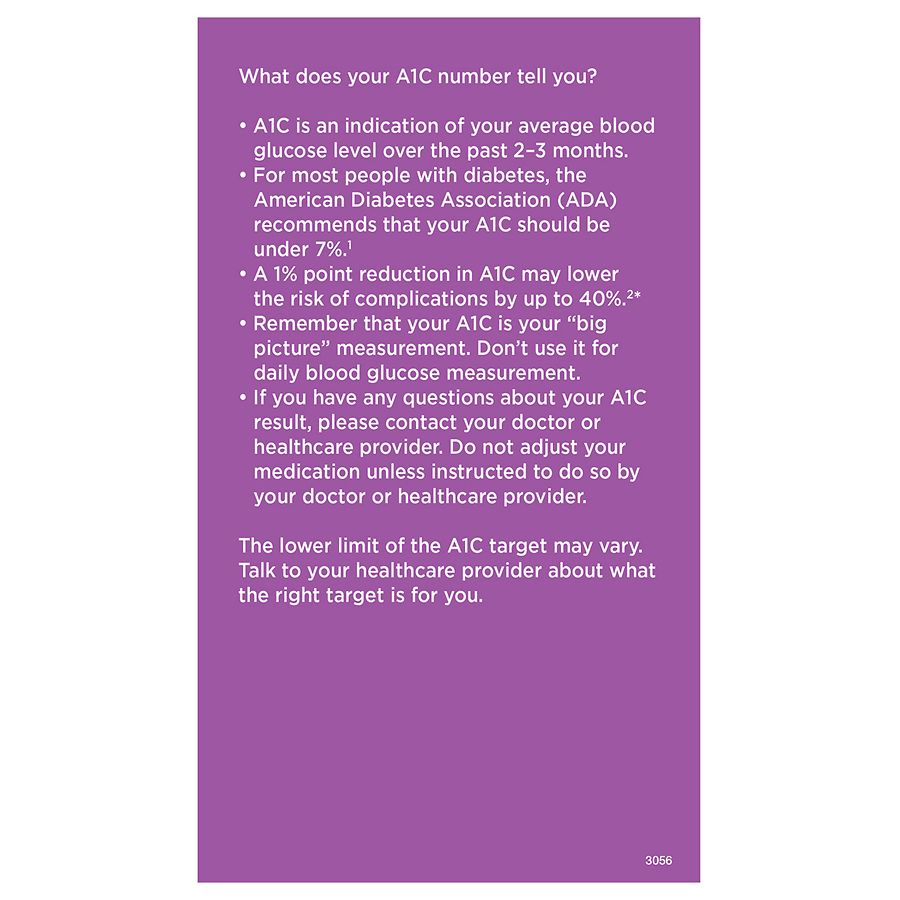
For people with Type 1 diabetes, in particular, blood sugar can fluctuate significantly throughout the days, weeks and months. Because of this, A1C isn’t always an accurate measurement of management since it’s based on an average. The number represents the portion of hemoglobin proteins that are glycated, or holding glucose. The higher the percentage, the higher your blood sugar levels have been over the last few months. If you’re concerned about prediabetes, testing every 3 to 6 months is recommended.

How to Bake Chicken Breast in the Oven (So It’s Always Juicy)

If your results come back out-of-range, a physician will notify you separately. Due to restrictions, Cerascreen tests are not available in Maryland, New York, New Jersey, and Rhode Island. The company also offers nutritional supplements, coaching, and health, nutrition, and fitness courses.

These medical reviewers confirm the content is thorough and accurate, reflecting the latest evidence-based research. Content is reviewed before publication and upon substantial updates. The A1C test for diabetes allows doctors to see glucose levels over a 2- to 3-month period. You’ll take the test by finger prick and will need to let the sample dry for 15 minutes before mailing the kit back.

At-home A1C tests for underserved populations

For those with gestational diabetes, blood sugar is important to monitor. Here, we explore the most effective ways to lower fasting blood sugar. We look at some of the best vegetarian meal plans for mothers with gestational diabetes.

The eAG calculation converts the A1C percentage to the same units used by home glucose meters—milligrams per deciliter (mg/dL). Get an A1C test to find out your average levels—important to know if you’re at risk for prediabetes or type 2 diabetes, or if you’re managing diabetes. If prediabetes is not treated, it can lead to the development of type 2 diabetes, heart disease, and stroke. The good news is that prediabetes is treatable and you can prevent prediabetes from progressing to type 2 diabetes by following the prediabetes treatment options listed. The process of taking a hemoglobin A1C test at home is pretty straightforward, but it does require you to prick your finger and collect a small blood sample. Most brands will provide you with everything you need in the kit, which usually includes a lancet , test strips, and instructions.

Will the A1C test show short-term changes in blood glucose levels?

If your results come back out-of-range, you have the option of a free telehealth consultation with a physician. Pixel by Labcorp is the at-home testing branch where you can request a test kit shipped to your home. There aren’t additional fees you need to pay when you go to the lab. You can take this test at your doctor’s office, but with advances in telehealth, you now have more options for at-home testing. Your A1C, or HbA1c, as it’s sometimes referred to, is like taking a snapshot of your glucose readings over the past 8 to 12 weeks. It shows all the new models of it and then compares them with all the other existing companies at this time.

a1c home test

Office capillary tests.Usually a fingerstick test during a visit to the office or clinic; a small in-office analyzer provides results, usually during the visit. The most common form of the oxygen-transporting hemoglobin protein is called hemoglobin A. The presence of other variants of the protein may result in inaccurate A1C test results. Hemoglobin variants are more common among people of African, Mediterranean or Southeast Asian descent. For most adults living with diabetes, an A1C level of less than 7% is a common treatment target.

The company’s specialty is sexually transmitted infection testing, but there are plenty of other tests. You’ll need to create an account with Pixel and pay online for your physician-ordered test. Pixel will email you a requisition number that you’ll take to a Labcorp testing center along with your photo ID. If you decide to become a member, you’ll have access to significant discounts on the testing options. For $24.99 per month, you can have one qualifying test shipped to you.

a1c home test

He also is the founder of Health Ramp Services, a company that brings new medical device companies to market. He has founded several digital businesses and has had a number of successful exits in e-commerce as well as software. His OnePet business is a leader in the online Pet Care space by creating and delivering high quality products and services for pet owners.

Ask your healthcare provider about blood sugar management tips, ways to monitor your glucose levels, and lifestyle changes that can help you take an active role in diabetes prevention. Some include adjusting your diet, exercising, getting better sleep, and relieving stress. Health care professionals also use the fasting plasma glucose test and the OGTT to diagnose type 2 diabetes and prediabetes. For these blood glucose tests used to diagnose diabetes, you must fast at least 8 hours before you have your blood drawn. If you have symptoms of diabetes, your doctor may use the random plasma glucose test, which doesn’t require fasting.

Everlywell began in 2015 and offers a wide range of at-home testing, including the HbA1c test. You’ll activate your test when you receive the box and answer a short questionnaire. If any results are out of range, a nurse will call you before your results appear on the platform. The a1c home test kits are durable and reliable, so they can be used repeatedly without breaking down.

If you have prediabetes, you have a higher risk of developing diabetes and cardiovascular disease. There are several factors that may affect the accuracy of home A1C tests, so discuss whether or not they are appropriate for you. A1C results are affected by pregnancy, rheumatoid factor, and blood disorders, such as sickle cell disease, anemia, transfusion, and blood loss. Your care provider has asked that you get your A1C tested every three months, but you can't complete the lab work in that time frame due to financial or scheduling circumstances. A hemoglobin A1C test measures the percentage of hemoglobin bound to glucose, which is a reflection of how much sugar has been circulating in the bloodstream.

a1c home test

A2Z Home Center Chino Valley, AZ Hardware Savings

Our Showrooms provide a wide range of merchandise of your convenience in Housewares, Bed and Bath Linens, Indoor and Outdoor Furniture, Decorative Items and Home Fragrances. Grab our household products & experience the elegant style, exquisite design and unique home items that suit for your daily use, special occasions & gifts to loved one in reasonable prices. The average price price of a home in Frankfurt am Main is 1,059,510 USD, and range in price between 532,417 USD and 11,180,763 USD. The most popular property types are Apartment and Penthouse . Common amenities in Frankfurt am Main are Terrace, Balcony, Garden and Open Kitchen. There are currently 31 luxury homes for sale in Frankfurt am Main, Hessen on JamesEdition.

Is a one stop shopping experience composed of different categories from housewares, bed & bath linens, outdoor and indoor furniture, decorative items and home fragrances. We are a home store retailing company selling different kinds of exquisite & elegant household products. We all know Thanksgiving and Christmas are right around the corner.

Housewares+

Do it Best® stores are committed to truthful and accurate advertising. The prices in this advertisement are suggested by Do it Best Corp., Ft. Wayne, IN. These advertised prices do not include taxes and may vary at independent Do it Best retailers. Some prices may be higher, some may be lower, some may be special reduced prices, others may be regular everyday low prices. If an item is out of stock, Do it Best retailers can offer a suitable replacement, or a "rain check" for the advertised item. Colors shown may vary and assembly may be required on some items.

a2z home center

We've heard of Black Friday and all the great deals from the big box stores. But what about giving back to the community during the holidays? On JamesEdition you can find luxury homes in Frankfurt am Main of any size between 1 and 6 bedrooms with an average of 92 ㎡ in size. Please enable JavaScript or switch to a supported browser to continue using twitter.com. You can see a list of supported browsers in our Help Center. All other marks contained herein are the property of their respective owners.

A2Z Home Store

JamesEdition can help you find the home that match all the preferences for your dream home. Use filters and narrow your search by price, number of bedrooms, bathrooms, and amenities to find homes that fit your criteria. Click on listings to see photos, amenities, price and much more. Needs to review the security of your connection before proceeding.

Homes for sale in Frankfurt, Germany have an average listing price of $1,059,510 and range in price between $532,417 and $11,180,763. The largest home for sale in Frankfurt, Germany is a $10,500,000 house with a size of 9,042 sqft. The most expensive home for sale in Frankfurt, Germany is a 9,042 sqft house with a listing price of $10,500,000.

Monday, July 20, 2020

The Best Hiking In Sarasota References

Top 10 Things to Do in Sarasota Fellow Farer True
Top 10 Things to Do in Sarasota Fellow Farer True from fellowfarertrue.com

Hiking in Sarasota is a wonderful way to explore the natural beauty of this coastal city in Florida. With its diverse landscapes and stunning views, Sarasota offers a wide range of hiking trails for outdoor enthusiasts of all levels. Whether you're a seasoned hiker or just starting out, there is something for everyone to enjoy in Sarasota's hiking trails.

One of the pain points of hiking in Sarasota is the hot and humid weather. The city's tropical climate can make hiking uncomfortable, especially during the summer months. However, with proper preparation and hydration, you can still enjoy the trails while staying safe and comfortable.

The target of hiking in Sarasota is to experience the natural beauty of the area and to engage in physical activity. Hiking provides a great opportunity to disconnect from the hustle and bustle of city life and immerse yourself in nature. It is a chance to rejuvenate your mind and body while exploring scenic landscapes and enjoying the fresh air.

In conclusion, hiking in Sarasota offers a wonderful opportunity to explore the natural beauty of this coastal city. Despite the challenges of hot and humid weather, the benefits of hiking in Sarasota are well worth it. Whether you're a beginner or an experienced hiker, there are trails suited to all levels of fitness and experience. So grab your hiking boots, pack your water bottle, and get ready to discover the hidden gems of Sarasota on foot.

Hiking in Sarasota: A Personal Experience

As an avid hiker, I was excited to explore the hiking trails in Sarasota during my recent visit. My experience exceeded my expectations, as I discovered a variety of trails that offered breathtaking views and unique natural features.

One of my favorite hikes was at Myakka River State Park. The park boasts several well-maintained trails that wind through lush forests and alongside the scenic Myakka River. I was in awe of the towering oak trees and vibrant wildlife that I encountered along the way.

Another memorable hike was at the Celery Fields, a reclaimed landfill turned nature preserve. The trails here offer panoramic views of the surrounding wetlands and are a haven for birdwatchers. I was fortunate to spot several species of birds, including herons and egrets, during my visit.

Hiking in Sarasota is not only about the natural beauty, but also about the history and myth surrounding the area. One of the most fascinating hikes I took was at Spanish Point, a historic site that dates back thousands of years. As I walked along the trails, I learned about the ancient civilizations that once inhabited the area and the stories and legends that have been passed down through generations.

One of the hidden secrets of hiking in Sarasota is the abundance of wildlife that you can encounter along the trails. From colorful butterflies to playful dolphins, there is always something new and exciting to discover. I was lucky enough to spot a family of manatees while hiking along the shoreline of Siesta Key Beach, an experience I will never forget.

Hiking in Sarasota: Recommendations

If you're planning to go hiking in Sarasota, here are a few recommendations to make the most of your experience:

  1. Start early in the morning or late in the afternoon to avoid the hottest hours of the day.
  2. Wear appropriate clothing and footwear for the terrain and weather conditions.
  3. Bring plenty of water and snacks to stay hydrated and energized.
  4. Don't forget sunscreen and insect repellent to protect yourself from the sun and bugs.
  5. Always stay on marked trails and follow any posted signs or guidelines.

Hiking in Sarasota and Wildlife

One of the highlights of hiking in Sarasota is the opportunity to encounter a diverse range of wildlife. From birds to reptiles, the trails are teeming with fascinating creatures. Keep your eyes peeled for the elusive Florida panther, which can occasionally be spotted in the more remote areas of the city.

Tips for Hiking in Sarasota

If you're new to hiking or visiting Sarasota for the first time, here are some tips to make your experience more enjoyable:

  • Start with shorter and easier trails to build up your stamina and confidence.
  • Research the difficulty level and length of the trail before setting out.
  • Check the weather forecast and plan accordingly.
  • Bring a map or use a GPS device to navigate the trails.
  • Hike with a buddy or let someone know your hiking plans.

Hiking in Sarasota: Safety Tips

While hiking in Sarasota can be a rewarding and enjoyable experience, it's important to prioritize safety. Here are some safety tips to keep in mind:

  • Stay hydrated and drink plenty of water throughout your hike.
  • Wear appropriate clothing and footwear for the terrain and weather conditions.
  • Carry a first aid kit and know basic first aid skills.
  • Be aware of your surroundings and watch out for potential hazards.
  • Follow any posted rules and regulations for the trail.

Fun Facts about Hiking in Sarasota

Did you know that Sarasota is home to one of the oldest and largest banyan trees in the United States? This massive tree can be found at the Marie Selby Botanical Gardens and is a must-see for nature lovers.

Another fun fact is that Sarasota is known as the "Circus Capital of the World" due to its rich circus history. The city was once the winter headquarters for the Ringling Bros. and Barnum & Bailey Circus, and you can still visit the Ringling Museum of Art to learn more about this fascinating part of Sarasota's past.

How to Hike in Sarasota

To hike in Sarasota, start by researching the different trails available in the area. There are several websites and apps that provide detailed information about the trails, including their difficulty level, length, and any notable features or points of interest along the way.

Once you have chosen a trail, make sure you have the necessary equipment and supplies, such as comfortable hiking shoes, a backpack, water, snacks, sunscreen, and insect repellent. Dress appropriately for the weather and wear layers that can be easily adjusted as needed.

Before setting out, let someone know your hiking plans, including the trail you will be on and your expected return time. It's also a good idea to check the weather forecast and any trail advisories or closures that may be in effect.

During your hike, stay on designated trails and follow any posted signs or guidelines. Take breaks as needed and drink plenty of water to stay hydrated. Enjoy the natural beauty around you and be respectful of the environment and any wildlife you may encounter.

What If You Go Hiking in Sarasota?

If you go hiking in Sarasota, you can expect to be surrounded by stunning natural landscapes, abundant wildlife, and a sense of tranquility and connection with nature. You may also experience a sense of accomplishment and improved physical fitness as you challenge yourself on the trails.

However, it's important to be prepared for the challenges that hiking in Sarasota can present. The hot and humid weather can be draining, so make sure to stay hydrated and take breaks as needed. Be aware of your own fitness level and choose trails that are suitable for your abilities.

Overall, hiking in Sarasota is a rewarding and enjoyable activity that allows you to explore the natural beauty of the area while engaging in physical activity. Whether you're a beginner or an experienced hiker, there are trails suited to all levels of fitness and experience.

Listicle: Hiking in Sarasota - The Top 5 Trails to Explore

  1. Myakka River State Park: This park offers a variety of trails that wind through forests and along the scenic Myakka River.
  2. Celery Fields: A reclaimed landfill turned nature preserve, this area offers panoramic views of wetlands and is a haven for birdwatchers.
  3. Rothenbach Park: With its diverse habitats and well-maintained trails, this park is a great option for nature lovers.
  4. Oscar Scherer State Park: This park features several trails that wind through pine flatwoods and oak hammocks.
  5. Legacy Trail: This paved trail stretches over 10 miles and offers a scenic route for walkers, runners, and cyclists.

Question and Answer: Hiking in Sarasota

Q: Are there any hiking trails in Sarasota that are suitable for beginners?

A: Yes, there are several hiking trails in Sarasota that are suitable for beginners. Rothenbach Park and Oscar Scherer State Park both offer well-maintained trails with varying difficulty levels.

Q: Can I bring my dog hiking in Sarasota?

A: Yes, many hiking trails in Sarasota are dog-friendly. Just make sure to keep your dog on a leash and clean up after them.

Q: Are there any guided hiking tours available in Sarasota?

A: Yes, there are several companies that offer guided hiking tours in

Sunday, July 19, 2020

Cool Do You Have To Schedule An Appointment For A Dentist Ideas

Key Questions You Should Ask a Dentist Before Your First Appointment
Key Questions You Should Ask a Dentist Before Your First Appointment from hosbeg.com

Are you dreading a trip to the dentist? Do you have to schedule an appointment for a dentist? These are questions that many people ask themselves when faced with the prospect of dental work. In this article, we will explore the answers to these questions and provide you with some helpful tips and information.

Pain Points

Visiting the dentist can be a source of anxiety and discomfort for many people. The thought of sitting in the dentist's chair and having someone poke around in your mouth can be unsettling. Additionally, the fear of potential pain or discomfort during the procedure can make the experience even more daunting. These pain points often contribute to the hesitation in scheduling a dentist appointment.

Do You Have to Schedule an Appointment for a Dentist?

Yes, it is necessary to schedule an appointment with a dentist for most dental procedures. Dentists have busy schedules and need to allocate specific time slots for each patient. By scheduling an appointment, you ensure that the dentist is prepared for your visit and can provide you with the necessary dental care. It also allows you to discuss any concerns or questions you may have before the procedure.

Summary of Main Points

In summary, scheduling an appointment for a dentist is essential for receiving proper dental care. It allows the dentist to allocate time for your visit and address any concerns or questions you may have before the procedure. While the thought of visiting the dentist may be anxiety-inducing, it is important to prioritize your oral health and seek professional care when needed.

Personal Experience and Explanation

During my last visit to the dentist, I had to schedule an appointment for a routine cleaning and examination. I initially hesitated to schedule the appointment due to previous negative experiences with dental procedures. However, I realized the importance of maintaining good oral health and decided to go ahead with the appointment. The dentist and dental hygienist were understanding and made sure I was comfortable throughout the process. They explained each step of the procedure and addressed any concerns I had. In the end, the appointment was quick and painless, and I left with a clean and healthy smile.

When it comes to scheduling an appointment for a dentist, it is important to find a reliable and trustworthy dental practice. Look for recommendations from friends, read online reviews, and consider the dentist's qualifications and experience. By choosing the right dentist, you can ensure a positive and comfortable experience during your appointment.

What is Scheduling an Appointment for a Dentist?

Scheduling an appointment for a dentist involves contacting a dental practice and booking a specific date and time for your visit. This allows the dentist to allocate the necessary time for your procedure or examination. It is important to provide accurate information when scheduling the appointment to ensure that the dentist is prepared and can provide the appropriate care.

During the appointment, you will typically undergo a dental examination, which may include x-rays, a cleaning, and a discussion about your oral health. The dentist will assess the condition of your teeth and gums and provide any necessary treatments or recommendations. Scheduling regular dental appointments is crucial for maintaining oral health and preventing dental issues.

History and Myth of Scheduling an Appointment for a Dentist

Throughout history, dental care has evolved significantly. In the past, dental procedures were often performed by barbers or individuals without proper training, leading to a lack of trust and fear surrounding dental visits. However, with advancements in dentistry and increased awareness of oral health, dental practices have become more regulated and professional.

Some myths surrounding scheduling an appointment for a dentist include the belief that dental procedures are always painful or that dental appointments are only necessary when experiencing pain or discomfort. These myths can prevent individuals from seeking proper dental care and lead to more significant dental issues in the long run. It is important to debunk these myths and prioritize regular dental appointments for preventive care.

Hidden Secrets of Scheduling an Appointment for a Dentist

One hidden secret of scheduling an appointment for a dentist is the potential benefits beyond oral health. Regular dental check-ups can also provide insights into your overall health. Dentists may discover early signs of systemic diseases or conditions such as diabetes, heart disease, or even certain types of cancer during an oral examination. By scheduling regular dental appointments, you can not only maintain good oral health but also potentially identify and address other health concerns.

Recommendations for Scheduling an Appointment for a Dentist

Here are some recommendations to make the process of scheduling an appointment for a dentist easier and more comfortable:

  1. Research and choose a reputable dental practice with positive reviews.
  2. Ask for recommendations from friends, family, or healthcare professionals.
  3. Call the dental practice and inquire about their services and availability.
  4. Be honest about your dental history, concerns, and any anxiety you may have.
  5. Ask questions about the procedure and any potential costs or insurance coverage.
  6. Arrive early for your appointment to fill out any necessary paperwork.
  7. Communicate openly with the dentist and dental staff about any discomfort or concerns during the procedure.
  8. Follow the dentist's recommendations for post-treatment care and maintenance.

Explaining Scheduling an Appointment for a Dentist in More Detail

Scheduling an appointment for a dentist is the first step in receiving professional dental care. It involves contacting a dental practice, providing necessary information, and booking a specific date and time for your visit. By scheduling an appointment, you ensure that the dentist is prepared and can allocate the necessary time for your procedure or examination.

Regular dental appointments are essential for maintaining good oral health. During these appointments, the dentist will perform a thorough examination of your teeth and gums, looking for signs of dental issues such as cavities, gum disease, or oral cancer. They may also take x-rays to get a more comprehensive view of your oral health.

If any issues are detected during the examination, the dentist will discuss treatment options and recommendations. This may include procedures such as fillings, crowns, root canals, or extractions. The dentist will explain the procedure, potential risks or side effects, and answer any questions you may have.

In addition to treating existing dental issues, regular dental appointments also focus on preventive care. The dentist will perform a professional cleaning to remove plaque and tartar buildup, which can contribute to tooth decay and gum disease. They may also provide guidance on proper oral hygiene practices, including brushing, flossing, and using mouthwash.

Overall, scheduling an appointment for a dentist is crucial for maintaining good oral health and preventing dental issues. It allows the dentist to provide personalized care, address any concerns or questions, and ensure that you receive the necessary treatments or preventive measures.

Tips for Scheduling an Appointment for a Dentist

Here are some tips to make scheduling an appointment for a dentist a smoother and more efficient process:

  • Keep track of your dental history and previous treatments.
  • Set reminders for regular dental check-ups to ensure you don't forget.
  • Communicate any changes or concerns to the dental practice promptly.
  • Consider scheduling appointments during less busy times to avoid long wait times.
  • Ask about any specific requirements or preparations for the appointment.
  • Inform the dental practice of any allergies or medical conditions.
  • Check with your insurance provider regarding coverage and potential costs.
  • Ask for a detailed breakdown of the procedure, including the expected duration and any necessary follow-up appointments.

Question and Answer

Q: How often should I schedule an appointment for a dentist?

A: It is generally recommended to schedule a dental appointment every six months for a routine check-up and cleaning. However, the frequency may vary depending on your oral health and any specific dental issues or conditions.

Q: What if I experience dental pain or an emergency situation?

A: If you experience severe dental pain or have a dental emergency, it is important to contact a dentist immediately. They will assess the situation and provide appropriate care as soon as possible.

Q: Can I schedule an appointment for a dentist online?

A: Many dental practices now offer online appointment scheduling options. Check the dental practice's website or contact them directly to inquire about online booking availability.

Q: What if I need to reschedule or cancel my appointment?

A: If you need to reschedule or cancel your appointment, it is important to notify the dental practice as soon as possible. They will work with you to find a new appointment time that suits your schedule.

Conclusion of Scheduling an Appointment for a Dentist

Scheduling an appointment for a dentist is essential for maintaining good oral health and receiving professional dental care. Despite the anxiety and discomfort that may be associated with dental visits, prioritizing regular check-ups and treatments is crucial for preventing dental issues and addressing any existing problems. By following the tips and recommendations outlined in this article, you can ensure a positive and comfortable experience during your dental appointments.

+29 How Do Dentist Install A Crown 2023

How Long Does a Dental Crown Last? l Lake Oconee Dental
How Long Does a Dental Crown Last? l Lake Oconee Dental from www.lakeoconeedental.com

Are you curious about how dentists install a crown? If so, you're not alone. Many people have questions and concerns when it comes to dental procedures, especially those involving the installation of a crown. In this article, we'll explore the process of how dentists install a crown, providing you with all the information you need to know.

When it comes to dental procedures, one of the most common pain points is the fear of pain and discomfort. Many people dread going to the dentist because they associate it with pain and discomfort. However, the process of installing a crown is typically painless, thanks to modern dental technology and anesthesia. Dentists take every precaution to ensure that their patients are comfortable throughout the procedure.

The process of installing a crown starts with the dentist preparing the tooth by removing any decay or damage. Then, they shape the tooth to ensure a proper fit for the crown. Next, the dentist takes impressions of the tooth to create a custom-made crown that matches the shape and color of the surrounding teeth. While waiting for the permanent crown to be fabricated, a temporary crown is placed on the tooth to protect it. Once the permanent crown is ready, the dentist cements it onto the tooth, ensuring a secure and long-lasting fit.

In summary, the process of installing a crown involves preparing the tooth, creating a custom-made crown, and cementing it onto the tooth. This procedure is typically pain-free and results in a natural-looking and functional tooth restoration.

How Do Dentists Install a Crown: A Personal Experience

As someone who recently went through the process of getting a crown, I can share my personal experience with you. First, my dentist explained the need for a crown due to a cracked tooth. She assured me that the procedure would be painless and that I would be comfortable throughout. I was given local anesthesia to numb the area around the tooth, which made the whole process painless.

Next, the dentist prepared my tooth by removing the damaged portion and shaping it to accommodate the crown. She then took impressions of my tooth and placed a temporary crown on it. While waiting for the permanent crown to be made, I wore the temporary crown, which provided protection and allowed me to eat and speak normally.

After a couple of weeks, I returned to the dentist to have the permanent crown installed. The dentist carefully removed the temporary crown, cleaned and prepared the tooth, and placed the permanent crown using dental cement. The whole process was quick and painless, and I was amazed at how natural and seamless the crown looked in my mouth.

Overall, my experience with getting a crown was positive, and I am thrilled with the results. It's important to remember that every individual's experience may vary, but modern dental techniques and technologies have made the process of installing a crown a comfortable and effective solution for tooth restoration.

What Is a Dental Crown and How Is It Installed?

A dental crown, also known as a dental cap, is a prosthetic restoration that covers a damaged or decayed tooth, restoring its shape, size, strength, and appearance. It is custom-made to fit over the existing tooth, providing a protective and aesthetically pleasing solution.

The process of installing a dental crown starts with the dentist assessing the tooth to determine if a crown is necessary. If a crown is recommended, the dentist will explain the procedure and answer any questions or concerns you may have. Once you're ready to proceed, the dentist will begin by numbing the area around the tooth with local anesthesia.

Next, the dentist will prepare the tooth by removing any decay or damage, ensuring a clean and stable foundation for the crown. The tooth is then shaped to accommodate the crown, usually by removing a small amount of enamel. This step is painless, thanks to the numbing effect of the anesthesia.

After the tooth is prepared, the dentist will take impressions of the tooth using dental putty or digital scanning technology. These impressions will be sent to a dental laboratory, where skilled technicians will create a custom-made crown that matches the shape, size, and color of your natural teeth.

In the meantime, the dentist will place a temporary crown on the prepared tooth to protect it. This temporary crown is usually made of acrylic or stainless steel and is designed to be a temporary solution until the permanent crown is ready.

Once the permanent crown is fabricated, you will return to the dentist for the final installation. The temporary crown will be removed, and the tooth will be cleaned and prepared for the permanent crown. The dentist will then carefully place the permanent crown on the tooth using dental cement, ensuring a secure and long-lasting fit.

After the crown is installed, the dentist will check your bite and make any necessary adjustments to ensure proper alignment and comfort. You will be given aftercare instructions, including how to care for your new crown and what to expect in the following days and weeks.

Installing a crown is a multi-step process that requires skill and precision. Dentists undergo extensive training to ensure they can provide the highest quality of care when installing a crown.

The History and Myth of Dental Crowns

The use of dental crowns dates back thousands of years. Ancient civilizations, such as the Etruscans and the Egyptians, were known to use gold crowns to restore damaged or missing teeth. These early crowns were primarily decorative and served as a symbol of wealth and status.

In ancient Rome, dental crowns were made from a combination of gold and ivory. The gold provided strength and durability, while the ivory mimicked the appearance of natural teeth. These crowns were often used to restore the smiles of the wealthy elite.

Throughout history, different materials have been used to create dental crowns, including porcelain, silver, and even animal teeth. However, it wasn't until the 20th century that advancements in dental technology allowed for the creation of more durable and natural-looking crowns.

Today, dental crowns are typically made from a combination of materials, including porcelain, ceramic, and metal alloys. These materials provide strength, durability, and a natural appearance. Modern dental crowns can last for many years with proper care and maintenance.

The Hidden Secrets of Dental Crown Installation

While the process of installing a dental crown may seem straightforward, there are some hidden secrets that you may not be aware of. One of these secrets is the use of digital technology in creating highly accurate impressions of your teeth. Digital scanners can create detailed 3D images of your teeth, eliminating the need for messy dental putty and providing a more comfortable experience.

Another secret is the skill and artistry involved in creating a custom-made crown. Dental technicians use their expertise to ensure that the crown matches the size, shape, and color of your natural teeth. This attention to detail is what makes the crown blend seamlessly with your smile.

Additionally, dentists may use temporary crowns made from tooth-colored materials to achieve a more natural appearance. These temporary crowns can be highly aesthetic and provide a preview of what the final crown will look like.

By understanding these hidden secrets, you can have a better appreciation for the precision and artistry involved in dental crown installation.

Recommendations for Dental Crown Installation

If you are considering getting a dental crown, here are some recommendations to ensure a successful and satisfying experience:

  • Choose a reputable and experienced dentist who specializes in restorative dentistry.
  • Ask for recommendations from friends, family, or your regular dentist.
  • Research the dentist's qualifications, credentials, and patient reviews.
  • Discuss your treatment options and expectations with the dentist.
  • Inquire about the materials used for the crown and their benefits.
  • Follow the dentist's aftercare instructions to ensure the longevity of your crown.

By following these recommendations, you can feel confident in your decision to get a dental crown and enjoy the benefits of a restored smile.

Understanding Dental Crown Installation in More Detail

Now, let's delve deeper into the process of dental crown installation. The first step is the initial consultation with your dentist, where they will evaluate your oral health and determine if a crown is necessary. They will explain the procedure and address any concerns you may have.

If a crown is recommended, the dentist will schedule an appointment for the installation. During this appointment, the dentist will numb the area around the tooth with local anesthesia to ensure a pain-free experience. They will then prepare the tooth by removing any decay or damage.

Once the tooth is prepared, the dentist will take impressions of the tooth using either dental putty or digital scanning technology. These impressions will serve as a blueprint for creating a custom-made crown that fits your tooth perfectly.

While waiting for the permanent crown to be fabricated, the dentist will place a temporary crown on the prepared tooth. This temporary crown will protect the tooth and allow you to eat and speak normally until the permanent crown is ready.

When the permanent crown is ready, you will return to the dentist for the final installation. The temporary crown will be removed, and the tooth will be cleaned and prepared for the permanent crown. The dentist will carefully place the crown on the tooth using dental cement, ensuring a secure and long-lasting fit.

After the crown is installed, the dentist will check your bite and make any necessary adjustments to ensure proper alignment and comfort. They will provide you with aftercare instructions, including how to care for your new crown and what to expect in the

So Youve Read The House of Mirth Now What? The New York Times

Table Of Content The House of Mirth: Jennifer Egan on Edith Wharton’s masterpiece Notes About Edith Wharton Latest news Latest blog posts Vi...